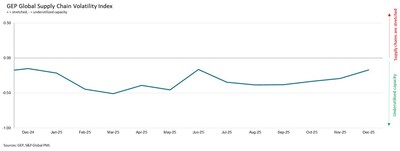

CLARK, N.J., Jan. 13, 2026 /PRNewswire/ -- GEP Global Supply Chain Volatility Index — a leading indicator tracking demand conditions, shortages, transportation costs, inventories and backlogs, based on a monthly survey of 27,000 businesses — continued to point to underutilized capacity across global supply chains in the final month of 2025.
Although the global index edged up to -0.17 in December, its highest level since June 2025, underlying data continue to signal softening global manufacturing demand, particularly in North America and Europe, where manufacturers reported sharper pullbacks in purchasing activity. With buffer inventories remaining historically low, the data point to a deteriorating outlook for goods producers across the Western world heading into 2026.
In December, North American manufacturers reduced procurement activity at the fastest rate since May 2025, marking the sixth consecutive month of softening input demand. Weakness was broad-based across the region, with Mexico posting the steepest contraction, underscoring a region-wide pullback in manufacturing activity.
Similarly, European factory purchasing fell further, registering its sharpest decline in nine months, driven primarily by pronounced cutbacks in Germany, where manufacturers continued to scale back orders amid weak demand pipelines.
In contrast, Asian supply chains showed greater resilience. Demand for production inputs improved in South Korea, Vietnam and Taiwan, while buying activity at Chinese factories stabilized, helping to support manufacturing demand across the region.
"Strong headline GDP growth in the U.S. is masking a more cautious reality for manufacturers," said John Piatek, Vice President, Consulting, GEP. "North American and European firms are cutting purchases and inventories, anticipating softening demand in 2026. Excess capacity across global supply chains is giving buyers leverage to secure better pricing and terms."
DECEMBER 2025 REGIONAL KEY FINDINGS
DECEMBER 2025 KEY FINDINGS
For more information, visit www.gep.com/volatility.
Note: Full historical data dating back to January 2005 is available for subscription. Please contact economics@spglobal.com.
The next release of the GEP Global Supply Chain Volatility Index will be 8 a.m. ET, Feb. 11, 2026.
About the GEP Global Supply Chain Volatility Index
The GEP Global Supply Chain Volatility Index is produced by S&P Global and GEP. It is derived from S&P Global's PMI® surveys, sent to companies in over 40 countries, totaling around 27,000 companies. The headline figure is a weighted sum of six sub-indices derived from PMI data, PMI Comments Trackers and PMI Commodity Price & Supply Indicators compiled by S&P Global.
A Supply Chain Volatility Index is also published at a regional level for Europe, Asia, North America and the U.K. For more information about the methodology, click here.
About GEP
GEP® delivers AI-powered procurement and supply chain solutions that help global enterprises become more agile and resilient, operate more efficiently and effectively, gain competitive advantage, boost profitability and increase shareholder value. Fresh thinking, innovative products, unrivaled domain expertise, smart, passionate people — this is how GEP SOFTWARE™, GEP STRATEGY™ and GEP MANAGED SERVICES™ together deliver procurement and supply chain solutions of unprecedented scale, power and effectiveness. Our customers are the world's best companies, including more than 1,000 Fortune 500 and Global 2000 industry leaders who rely on GEP to meet ambitious strategic, financial and operational goals. A leader in multiple Gartner Magic Quadrants, GEP's cloud-native software and digital business platforms consistently win awards and recognition from industry analysts, research firms and media outlets, including Gartner, Forrester, IDC, ISG, and Spend Matters. GEP is also regularly ranked a top procurement and supply chain consulting and strategy firm, and a leading managed services provider by ALM, Everest Group, NelsonHall, IDC, ISG and HFS, among others. Headquartered in Clark, New Jersey, GEP has offices and operations centers across Europe, Asia, Africa and the Americas. To learn more, visit www.gep.com.
Media Contacts
Derek Creevey | Joe Hayes |
Director, Public Relations | Principal Economist |
GEP | S&P Global Market Intelligence |
Phone: +1 646-276-4579 | Phone: +44-1344-328-099 |
Email: derek.creevey@gep.com | Email: joe.hayes@spglobal.com |
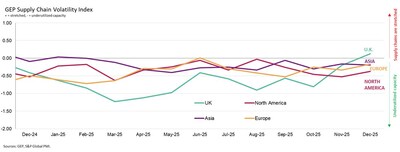
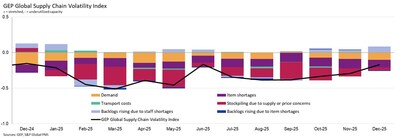

Photo - https://mma.prnewswire.com/media/2860530/GEP_1.jpg
Photo - https://mma.prnewswire.com/media/2860531/GEP_2.jpg
Photo - https://mma.prnewswire.com/media/2860532/GEP_3.jpg
Logo - https://mma.prnewswire.com/media/518346/5715049/GEP_Logo.jpg

Back | Next story: Driven by Customer Success: Hyland Recognized with the IDC 2025 Customer Satisfaction Award for Content and Experience Management
 View original content: